
How to Check Criminal History in Dimmit County
Choose the custodian by asking what stage of the case you need. The Dimmit County Sheriff is the first call for a recent booking, current custody, or a sheriff report. The District Clerk searches felony files in the 293rd and 365th District Courts. The County Clerk searches Class A and Class B misdemeanor cases in County Court. A justice or municipal court keeps its own fine-only cases and warrants. No official county-wide criminal case portal, jail roster, or warrant search was found, so phone and counter access matter here.
Prepare a full legal name, a date of birth if the office accepts it, an approximate event or filing year, and any report, booking, citation, or cause number. A clerk may need enough detail to separate similar names. Ask which court or agency created the item, whether the file is electronic or archived, and whether a copy can be emailed. For court records, state whether you need a plain copy or a certified copy. Dimmit County does not publish a general copy-fee sheet, so request a cost estimate first.
- Call the sheriff for a recent arrest, booking, current custody, or warrant confirmation.
- Contact the District Clerk for a felony file or the County Clerk for a Class A or B misdemeanor.
- Use the correct justice or municipal court for fine-only charges, citations, and court-issued warrants.
- Compare the local file with the Texas DPS public name search when statewide public conviction data is useful.
- For your own identity review or correction, follow the official fingerprint process instead of relying on names alone.
Dimmit County Records Live in Four Offices
The local system divides criminal records by function. Sheriff Chris Castaneda's office creates or holds sheriff reports, booking data, jail status, and warrant information. District Clerk Maricela G. Gonzalez keeps every pleading and paper filed in Dimmit County district cases. County Clerk Claudia McDaniel keeps the County Court criminal docket. The justice and municipal courts retain their own lower-level case records. Sending every request to a single courthouse desk can miss the right file even though the main offices sit close together in Carrizo Springs.
The official Dimmit County directory shows how county departments are split.
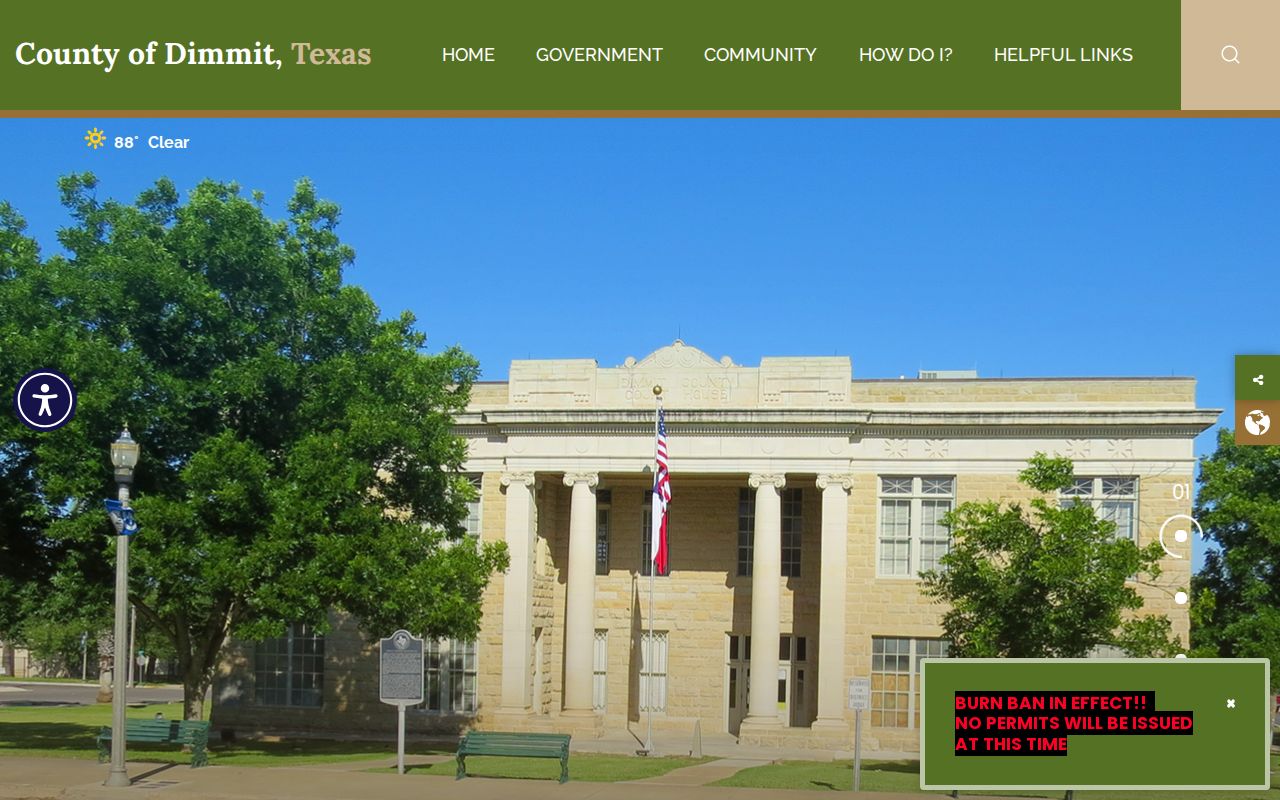
That department map is useful because the record follows the office that created, filed, or maintains it, not one all-purpose county index.
District Clerk
212 N. Fourth Street, Suite 202
Carrizo Springs, TX 78834
830-876-4243, ext. 1211-1214
Monday-Friday, 8 a.m.-noon and 1-5 p.m.
County Clerk
103 N. Fifth Street
Carrizo Springs, TX 78834
830-876-2323, option 5 then 1
Criminal and probate phone route
Dimmit County Sheriff
P.O. Box 885
Carrizo Springs, TX 78834
830-876-3508
No published walk-in street address or records hours
Official Texas Background Checks
The Texas Department of Public Safety Crime Records Division maintains the Computerized Criminal History system. Its public name search shows disseminable Texas conviction and deferred-adjudication information reported to DPS. It is broader than a Dimmit County clerk search, but it is not the complete court file and may not show a recent arrest or a nonpublic event. The TxDPS Public Criminal History Name Search requires a public account and prepaid search credits.
For a review of your own Texas history, fingerprints provide the reliable identity link. DPS routes personal review through Fingerprint Applicant Services of Texas, delivered by IdentoGO. Start with the DPS fingerprint instructions, then use the FAST scheduling process supplied for the service. No permanent Dimmit County enrollment site was verified. Check the live scheduler for the current nearest or mobile appointment. The CRD inquiry number is 512-424-2474, option 2.
| Official channel | Identity method | Best use | Known price |
|---|---|---|---|
| TxDPS public search | Name and optional birth data | Public statewide conviction and deferred data | $1 per initial search credit, plus card charges |
| TxDPS personal review | Fingerprints through FAST | Your own Texas record and correction work | Verify in the live process |
| Dimmit County clerks | Name, year, or cause number | Filed local court documents | Not published |
Dimmit County's $1 DPS Record Search
A paid DPS result should not be called a full rap sheet. Last and first names are required. Middle or maiden name and a full or partial birth date can narrow the match. A no-match query still uses a credit. DPS may apply exact and Soundex-like name variations, then explain how a result matched. Review descriptive data before opening a record because a name and date alone cannot positively identify a person.
The public search starts at one $1 credit. Credit-card purchases add 2.25 percent plus $0.25 per transaction. Current help text says automated variations and multiple rap sheets do not add charges to the initial search, while older wording differs. Read the live price notice before purchase and save the result at the time of the search.
| Search field | Required | How to use it |
|---|---|---|
| Last Name | Yes | Use the full surname, not an initial or nickname |
| First Name | Yes | Enter the full first name |
| Middle or Maiden Name | No | Add it to reduce false matches |
| Date of Birth | No | A complete or partial date can narrow results |
Note: A DPS no-hit result does not prove that no local arrest, sealed event, unreported disposition, or older paper case exists.
Types of Criminal Records
Each record answers a different question. An incident report explains an agency response. An arrest report documents the officer's action and alleged offense. A jail booking records intake, custody, bond, and release or transfer. A charging document states what the prosecutor filed. The court file then tracks settings, motions, pleas, orders, judgment, and sentence. DPS CCH groups fingerprint-linked arrest cycles with reported outcomes, while the public DPS product shows only the portion Texas law allows for public dissemination.
- Police or sheriff report: Request it from the agency that responded or made the arrest.
- Booking record: Ask the Dimmit County Sheriff about current or past county-jail intake.
- Court case file: Use the District Clerk, County Clerk, justice court, or municipal court based on the charge.
- Warrant record: Confirm it with both the sheriff and the issuing court because status can change.
- Custody or supervision record: Use the sheriff for county custody and TDCJ for sentenced state custody.
A public absence has several possible meanings. The event may be too new, filed under another spelling, held by a different office, restricted by law, or not part of the public DPS product. It is not safe to turn silence from one source into a broad conclusion.
Dimmit County Bookings, Cases, and CCH
A booking charge is the allegation entered at jail intake. It may be amended, enhanced, rejected, or dismissed. A filed charge appears in the clerk's case file after the prosecutor or grand jury acts. A CCH entry is the state's fingerprint-linked cycle and reported disposition. The three records can display different wording without one being false because each captures a different time and legal action.
- Cause number
- The court's identifier for a filed case.
- Disposition
- The current or final outcome assigned to a charge or case.
- No-bill
- A grand jury decision not to approve an indictment.
- Deferred adjudication
- Supervision imposed without an initial judgment of guilt, subject to completion or revocation.
- Capias
- A court writ that directs an arrest, often after a case action or failure to appear.
Use careful labels when comparing sources: “booked for,” “charged with,” and “disposed as” preserve the distinction between allegation and result. The full progression from arrest to prosecution is covered in the Dimmit County criminal court case records.
What a Dimmit County Criminal Record Shows
The fields depend on the custodian. A court file emphasizes the judge, parties, filed charge, docket, bond orders, pleas, and outcome. A booking entry emphasizes intake identity, arresting agency, initial charge, custody, and release. A DPS public history can group aliases, arrest cycles, tracking data, and reported dispositions. Public copies may remove Social Security numbers, sensitive birth data, juvenile details, victims' identities, medical information, and protected addresses.
| Name and Identifiers | Legal name, aliases, birth data as released, and record identifiers |
|---|---|
| Arrest or Booking | Date, agency, tracking or booking number, and initial alleged offense |
| Filed Charge | Offense description, statute, degree, indictment, information, or complaint |
| Case Activity | Settings, motions, pleas, continuances, bond, and filed orders |
| Disposition | Dismissal, conviction, acquittal, no-bill, deferred adjudication, or other result |
| Sentence or Supervision | Confinement, fine, costs, community supervision, or related order |
Read the date and source with every field. A release date is not a court disposition, and a docket setting is not a judgment.
Dimmit County Jail and Prison Records
Dimmit County publishes no official online jail roster, booking log, jail address, capacity, or inmate service schedule. Call the sheriff at 830-876-3508 with the full name and date of birth if accepted. Ask for the booking number, booking date, current facility, charge, bond, magistrate or court, and release or transfer status. Confirm visitation, mail, money, and phone rules by calling because no official vendor or schedule was located.
State prison is a separate system. The TDCJ Online Inmate Search accepts a name, TDCJ number, or SID number and can show a sentenced prisoner's unit, offense, projected release, sentence, and parole fields. It does not show a Dimmit County jail pod, current county bond, or every court pleading. Federal custody is different again and uses the Bureau of Prisons locator.
Custody flow: Local arrest › Dimmit County booking or other holding facility › court disposition › TDCJ only if a state sentence requires transfer.
Texas calls probation community supervision. A Dimmit County judgment can state the term, whether adjudication was deferred, and later motions to revoke or adjudicate. The tri-county 293rd Judicial District CSCD handles local supervision, but Dimmit County publishes no dedicated CSCD page or office address. Confirm the current local contact through the District Clerk. Parole decisions belong to the Texas Board of Pardons and Paroles, while the TDCJ Parole Division handles field supervision. Internal supervision notes and treatment details are not ordinary public court fields.
Start with the judgment when checking supervision. Then compare any TDCJ status and contact the correct supervision office. A technical violation or new allegation may lead to a motion, warrant, and hearing, but it is not a final revocation until the court or parole authority acts.
Public Access Laws
The Texas Public Information Act applies to records collected or maintained in public business, subject to confidentiality laws and exceptions. Court files follow court access law and rules rather than an ordinary PIA request to the sheriff. DPS criminal-history information also has its own dissemination limits. Juvenile data, victim information in sensitive cases, active-investigation material, secure jail information, and private identifiers may be withheld or redacted.
Key Texas authorities:
Government Code Chapter 552 governs access to public-agency records and statutory exceptions.
Government Code Chapter 411 controls criminal-history dissemination and orders of nondisclosure.
Texas Rule of Judicial Administration 12 addresses judicial records, while filed case records follow other access rules.
Code of Criminal Procedure Chapter 55A sets the current expunction process.
A person's reason for a PIA request is not the test for release. The custodian applies the law to the record. If an agency seeks an Attorney General ruling, the familiar ten-business-day period concerns that request for a ruling, not a promise that every response arrives within ten days.
Dimmit County Requests Need the Right Custodian
Send a law-enforcement request to the agency that produced the report. Describe the event, approximate date, location, report or booking number, and the exact items sought. Ask for electronic copies and a cost estimate. Preserve proof of delivery. Send a court-file request to the clerk instead. Prosecutors decide charges, but the District Attorney and County Attorney are not substitutes for the clerk who keeps filed pleadings and judgments.
The official County Court page identifies the constitutional county court and its Carrizo Springs contact.
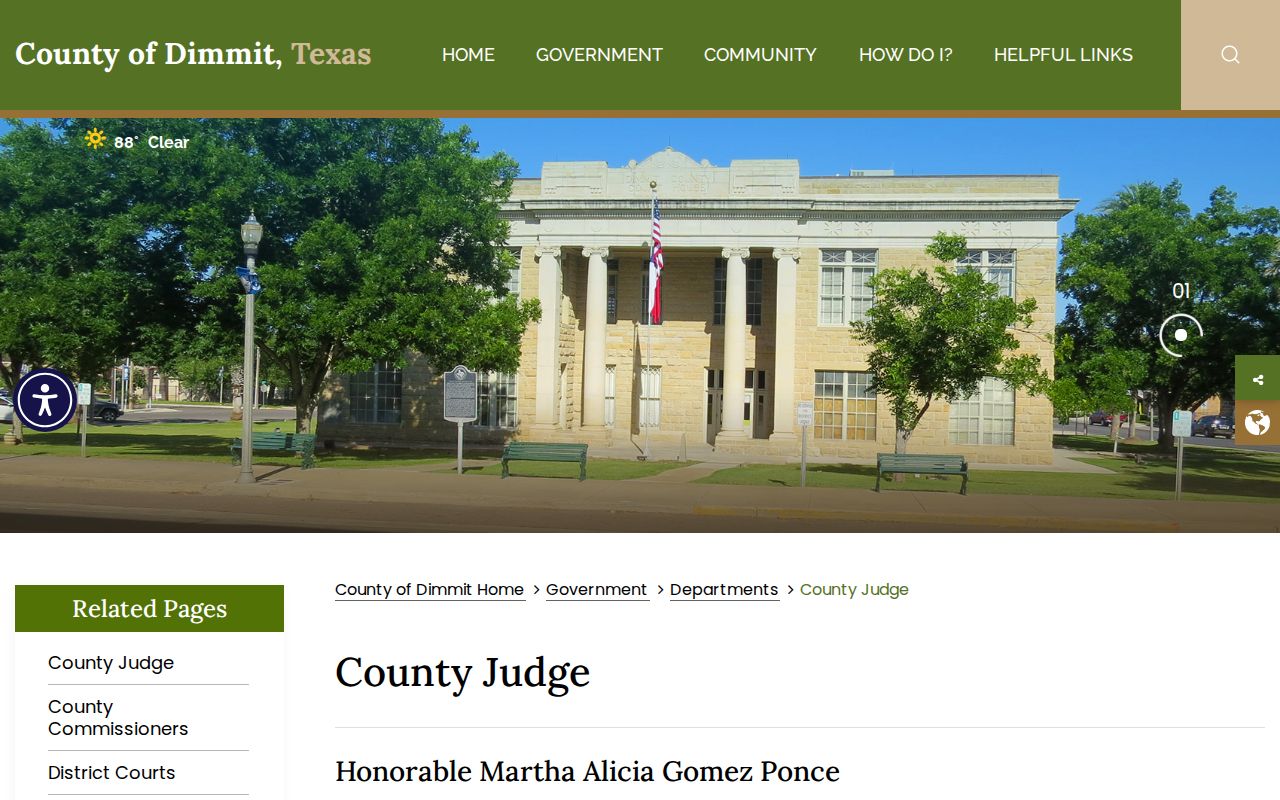
This office is part of the local court structure, while the County Clerk remains the records custodian for the county criminal docket.
If an office does not hold the requested item, ask it to identify the producing agency or filing court. That one question can prevent a long trip across a county that covers roughly 1,329 square miles.
Dimmit County has no public active-warrant portal. Confirm an arrest warrant with the sheriff and the issuing court. District capias records may connect to the 293rd or 365th docket, County Court warrants to the County Clerk file, and fine-only warrants to the correct justice or municipal court. Ask for the cause number, warrant type and status, issuing court, bond, and safe resolution instructions. A stale list or an old payment receipt is not current confirmation.
Sealed, Expunged & Restricted
Texas uses expunction for statutory removal and obliteration of qualifying arrest records. An order of nondisclosure seals eligible history from ordinary public release but preserves access for agencies named by law. The two remedies do not mean the same thing. Juvenile information follows separate restrictions under Family Code Chapter 58. Other protected material can include active-investigation details, sensitive victim or child identities, medical data, and private identifiers.
Chapter 55A replaced former Chapter 55 on January 1, 2025. Acquittal, pardon, actual-innocence relief, mistaken identity, some dismissals or no-bills after statutory conditions, and certain fine-only outcomes may provide routes to relief. Eligibility turns on the arrest, the charge, related criminal episodes, and the exact result. A dismissal does not erase a Dimmit County arrest by itself.
After an order, the clerk sends it to DPS, the Office of Court Administration, and listed entities for processing. Recheck the local index and obtain your own fingerprint-based DPS review after enough processing time. The District Clerk can explain filing practice but cannot decide eligibility or give legal advice.
Dimmit County Expunction Starts at Suite 202
For an arrest in Dimmit County or an offense alleged here, the district court is generally the starting court under Chapter 55A. Contact the District Clerk at Suite 202 before filing. Ask for the current filing fee, service and notice costs, accepted petition and proposed-order format, and whether the assigned court requires a hearing. No local packet or fee schedule was published, so a guessed form or price would be unsafe.
A petition must identify the arrest and charges accurately and list every agency or entity likely to hold the record. Article 55A.351 directs the clerk to notify DPS Crime Records Service, OCA, and the named entities after a final order. This is a court remedy, not a request for a clerk to press a delete button. Uncertain eligibility calls for legal advice from counsel, not from the filing counter.
Note: Check both the local court index and your fingerprint-based DPS record after the order has moved through every listed agency.
Dimmit County Criminal Records Follow the Charge
Felonies belong to the 293rd or 365th District Court files held by the District Clerk. Class A and B misdemeanors go to the constitutional County Court file held by the County Clerk. Fine-only Class C and local citation matters belong to a justice or municipal court. The county routes JP Precincts 1 and 6 and Precinct 2 through the courthouse annex. Precinct 3 is in Big Wells, and Precincts 4, 5, and 7 use the Asherton counter.
The Dimmit County justice court directory lists the four local phone routes.
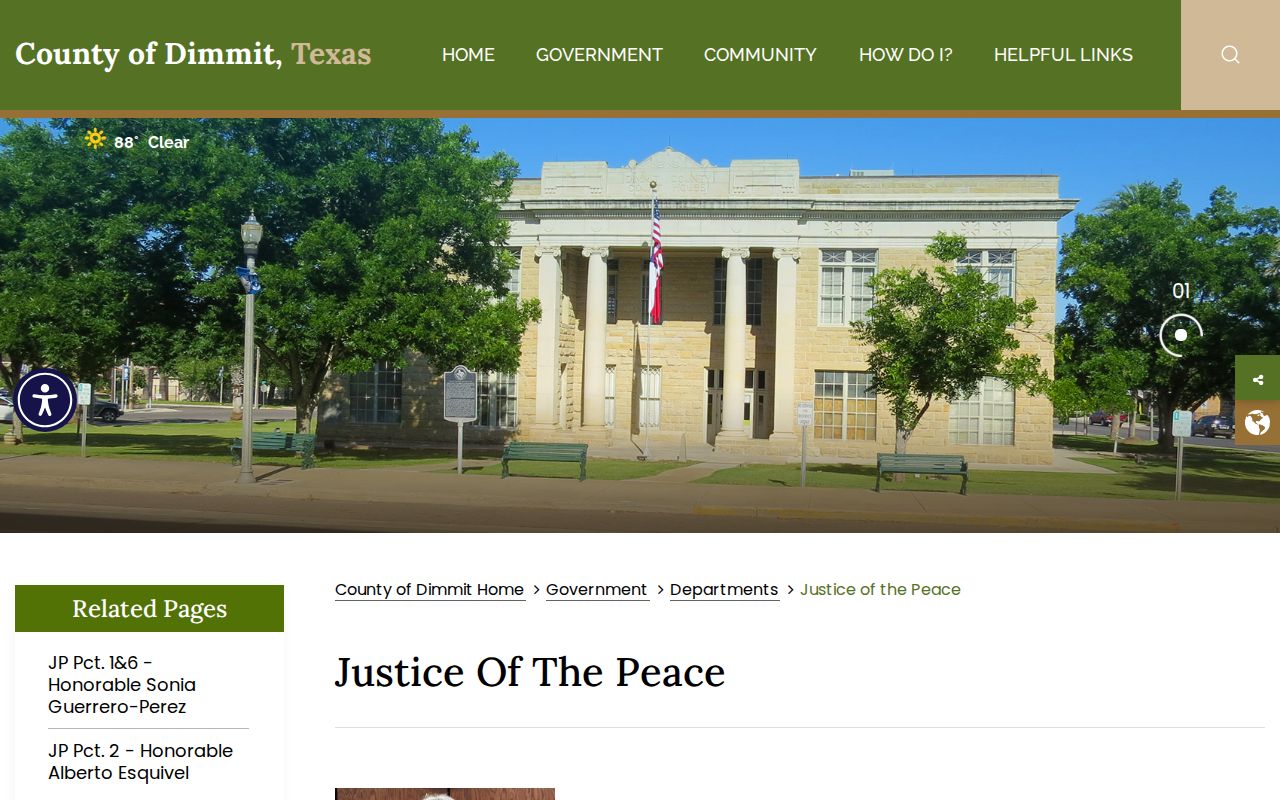
The separate precinct contacts show why the place of the citation or issuing court matters when searching a fine-only case or bench warrant.
The 293rd and 365th District Courts serve Dimmit, Maverick, and Zavala Counties. Their judges are based in Eagle Pass, but Dimmit case papers remain with the Carrizo Springs District Clerk. The judge's office location does not change the custodian.
- First-degree felony: 5 to 99 years or life and a fine up to $10,000; filed in District Court.
- State-jail felony: 180 days to 2 years and a fine up to $10,000; filed in District Court.
- Class A misdemeanor: up to 1 year in county jail and a fine up to $4,000; filed in County Court.
- Class C misdemeanor: fine only, generally up to $500 unless the offense law differs; filed in justice or municipal court.
The filed statute and any enhancement paragraph control. Abbreviations such as F1, SJF, MA, or MC help route a search, but they should never replace the actual charging document.
Dimmit County Criminal Records Span 1,329 Square Miles
Dimmit County lies in the Winter Garden region and borders Mexico. Carrizo Springs is the records hub, yet long roads, three incorporated cities, state highways, ranching, energy work, and border geography can place the first record with different agencies. A city officer, sheriff's deputy, constable, or DPS trooper may produce the source report. Route the search by agency and court instead of sending it to “the courthouse.”
Crime statistics require the same care. No stable official county annual report with complete local counts was found. The Texas DPS Crime in Texas program is the official starting point.
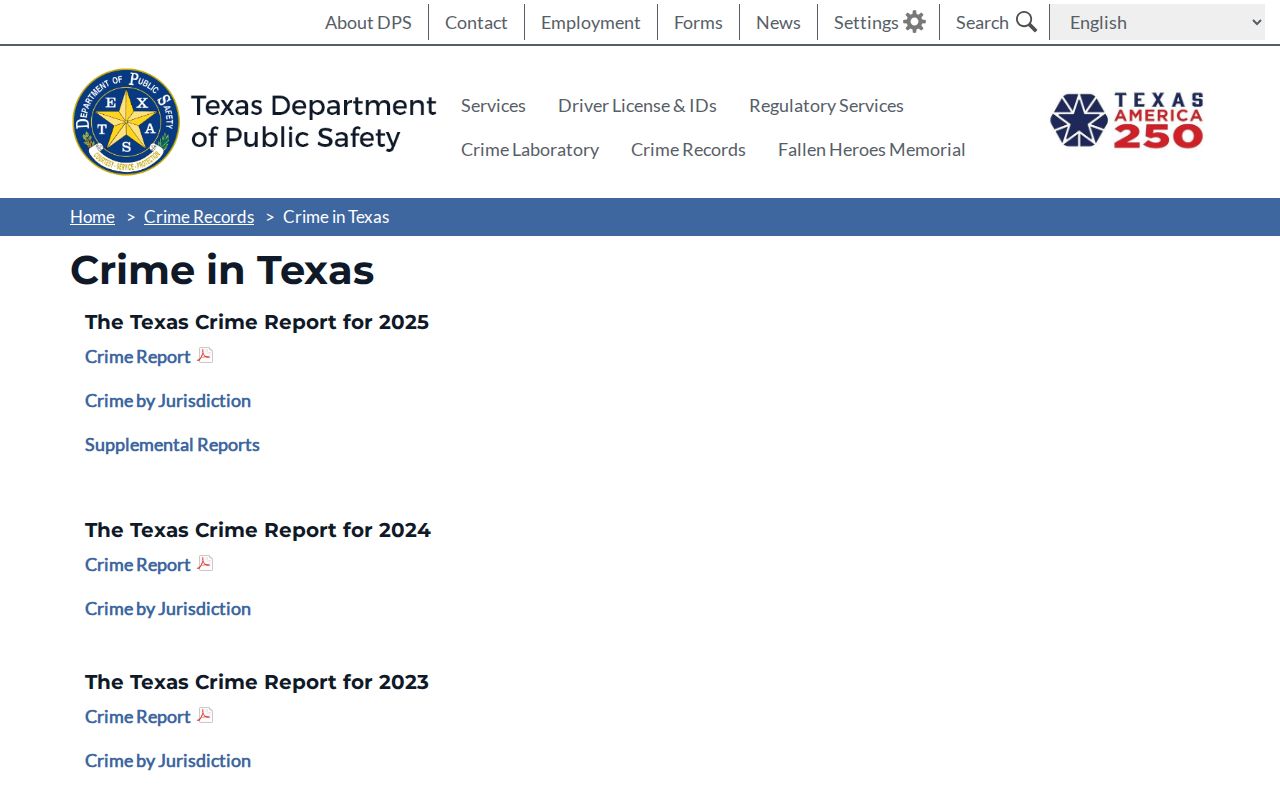
When using those figures, state the year, selected agency, population basis, and agency coverage. Small raw counts can produce sharp rate swings in a county with 8,615 residents in the 2020 Census.
Criminal Records by City in Dimmit County
Carrizo Springs, Asherton, and Big Wells are Dimmit County's three incorporated cities. A city-originated report remains with the responding city office or other arresting agency. A county booking goes to the sheriff, while a filed Class A or B case moves to the County Clerk and a felony moves to the District Clerk. Each city page keeps the first steps local and then shows the correct county route.
Carrizo Springs Criminal History
2020 population 4,892. City police reports begin with the city directory; county records offices are nearby.
Asherton Criminal History
2020 population 833. The local JP counter is a key fine-only and warrant route.
Big Wells Criminal History
2020 population 483. JP Precinct 3 and Constable Precinct 3 provide the strongest local channels.
The Texas Municipal League directory supplies the official Big Wells city listing.
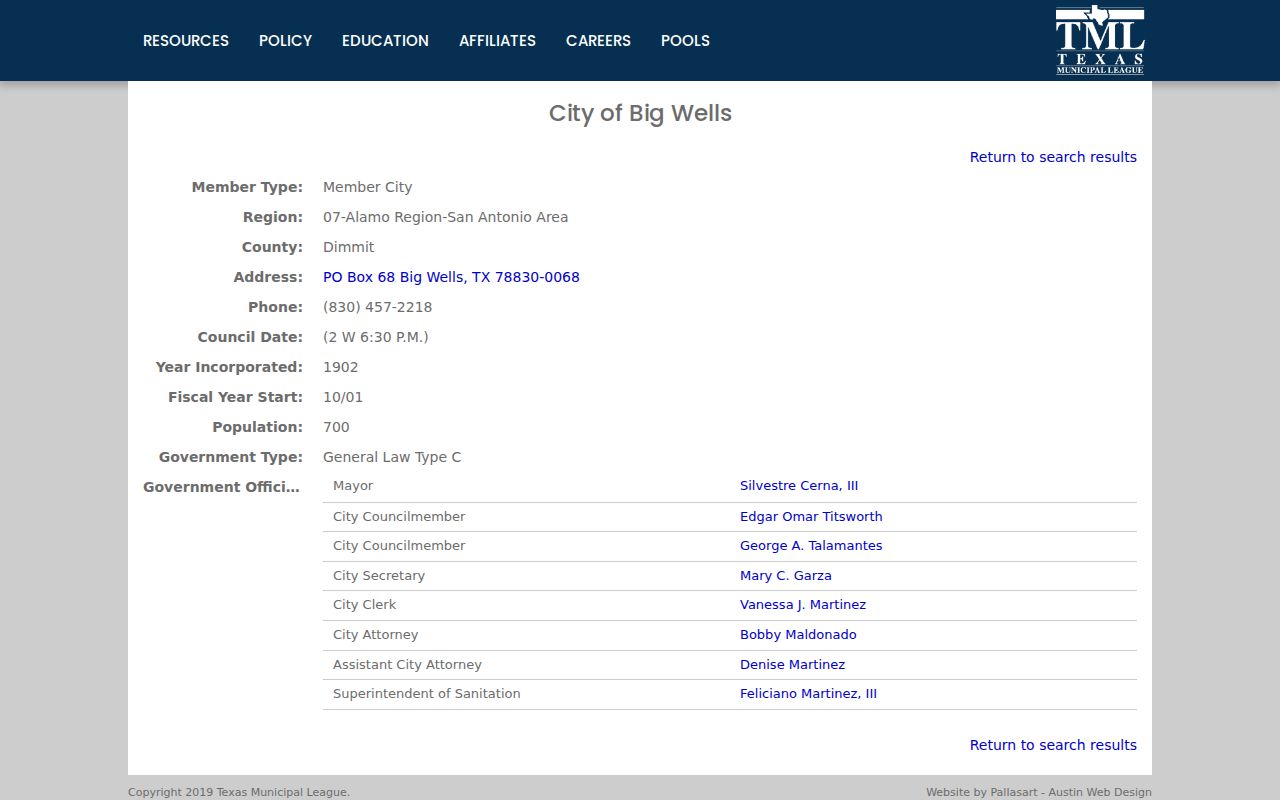
The listing confirms the small city's mailing contact, while court, constable, sheriff, and clerk records still follow their separate custodians.